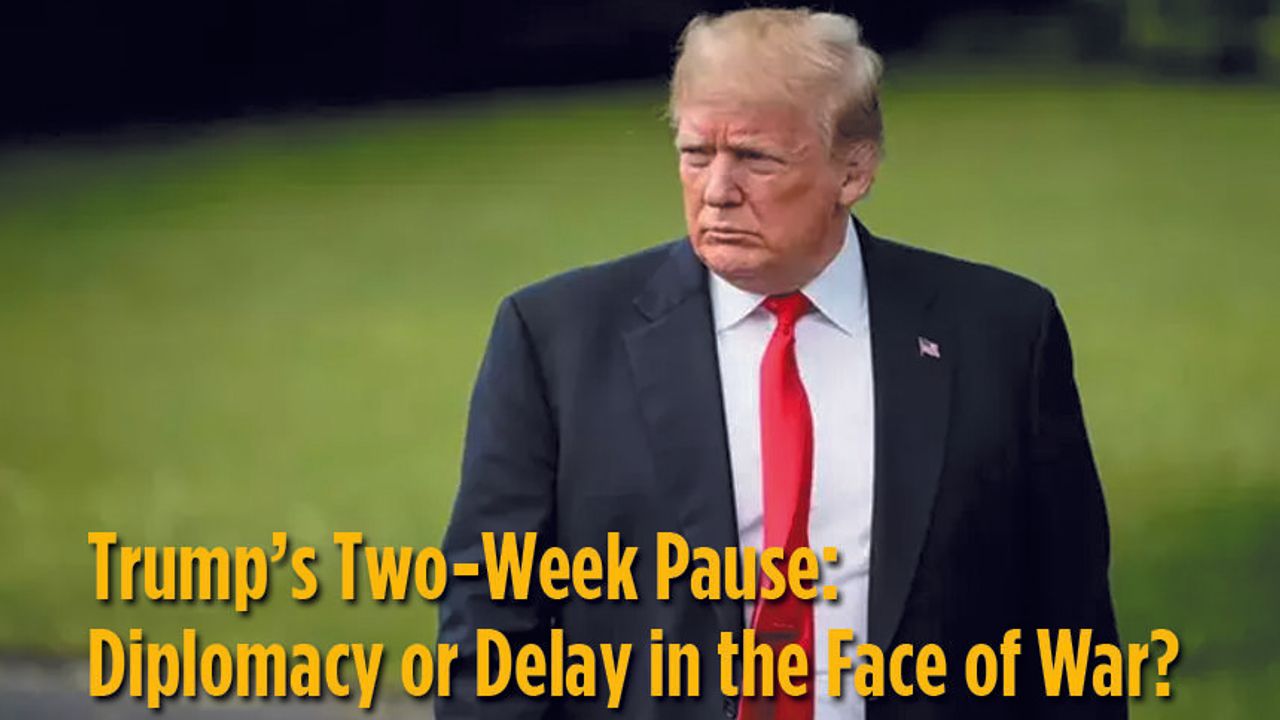
As the Middle East descends into turmoil once again, all eyes are on the White House. Following Israel’s airstrikes against Iran, speculation has grown over whether the Trump administration will intervene. Surprisingly, Trump has decided to delay his decision for two weeks, adopting a "wait and see" approach.
At first glance, this might seem indecisive. Yet some in Washington view it as a strategic move. Speaking to CNN International, former White House and State Department official Brett McGurk said, “These two weeks could be used to give diplomacy a chance. If this is a true deadline that ends in either resolution or force, it could be a meaningful balance.”
Still, Trump’s past promises to decide “within two weeks” have often gone unfulfilled. On issues like infrastructure, trade deals, and sanctions on Russia, he’s shown a pattern of inaction. This has raised concerns that the delay may be more about buying time than building peace.
🚨 ‘TRUMP ALWAYS CHICKENS OUT’
There were recent reports suggesting a U.S. airstrike on Iran’s Fordow nuclear facility was imminent. But after reviewing military options, Trump pulled back. Social media exploded with the hashtag “#TACO” (Trump Always Chickens Out). According to a CNN analysis, Trump may this time be prioritizing real-world consequences over digital posturing. A military strike could endanger U.S. troops and destabilize the entire region.
White House spokesperson Karoline Leavitt announced that Trump wants to give diplomacy another shot. “There are serious indications of potential talks with Iran in the near future,” she said. “That’s why a final decision will come in the next two weeks.”
However, Trump’s track record with Iran is bleak. Since the collapse of the previous nuclear agreement, distrust between the two sides has only deepened. Still, six days of Israeli bombardments may have shifted Iran’s strategic calculations.
💣 ‘THE DECISION OF HIS LIFE’
Trump has faced many crises during his presidency, but this one is different. Trade wars and immigration policies can be reversed. Sending B-2 bombers to Fordow cannot.
Experts are drawing parallels to JFK’s approach during the Cuban Missile Crisis. According to Carnegie Endowment Iran expert Karim Sadjadpour, “Iran typically backs down under three pressures: economic sanctions, military threat, and diplomatic isolation. But it also needs a fourth: an honorable way out.”
Trump’s calls for “unconditional surrender” have had the opposite effect in Iran. Analysts argue that a softer tone might be the only way to open real dialogue.
🇮🇱 WILL ISRAEL WAIT?
Trump’s delay has left not just the U.S. but Israel in suspense. Tel Aviv is weighing whether it can neutralize Fordow without U.S. support. Former U.S. Special Forces advisor Seth Jones summarized the tension: “If the U.S. is truly giving diplomacy time, will Israel wait? That remains to be seen.”
Meanwhile, Trump may be using the pause to sway public opinion. Key conservative figures like Steve Bannon and Tucker Carlson oppose a new Middle East war. A recent meeting between Trump and Bannon suggests the base may still rally behind him.
⏳ HOW WILL HE USE THE TIME?
Will Trump avoid war, or just stall? No one knows for sure. But experts agree: this crisis could be the defining national security test of Trump’s presidency—and its outcome may reshape not only the region, but the world.